



By Amelia Cosgrove

Charity mascots, loyal companions and ghostly sightings all form part of Lincoln’s surprisingly rich canine history.
At a time when Lincoln is embracing its reputation as a dog-friendly city - with more cafés, pubs, parks and businesses openly welcoming our four-legged friends, the stories I’m about to share, represent how dogs have always been embedded within Lincoln’s local life.
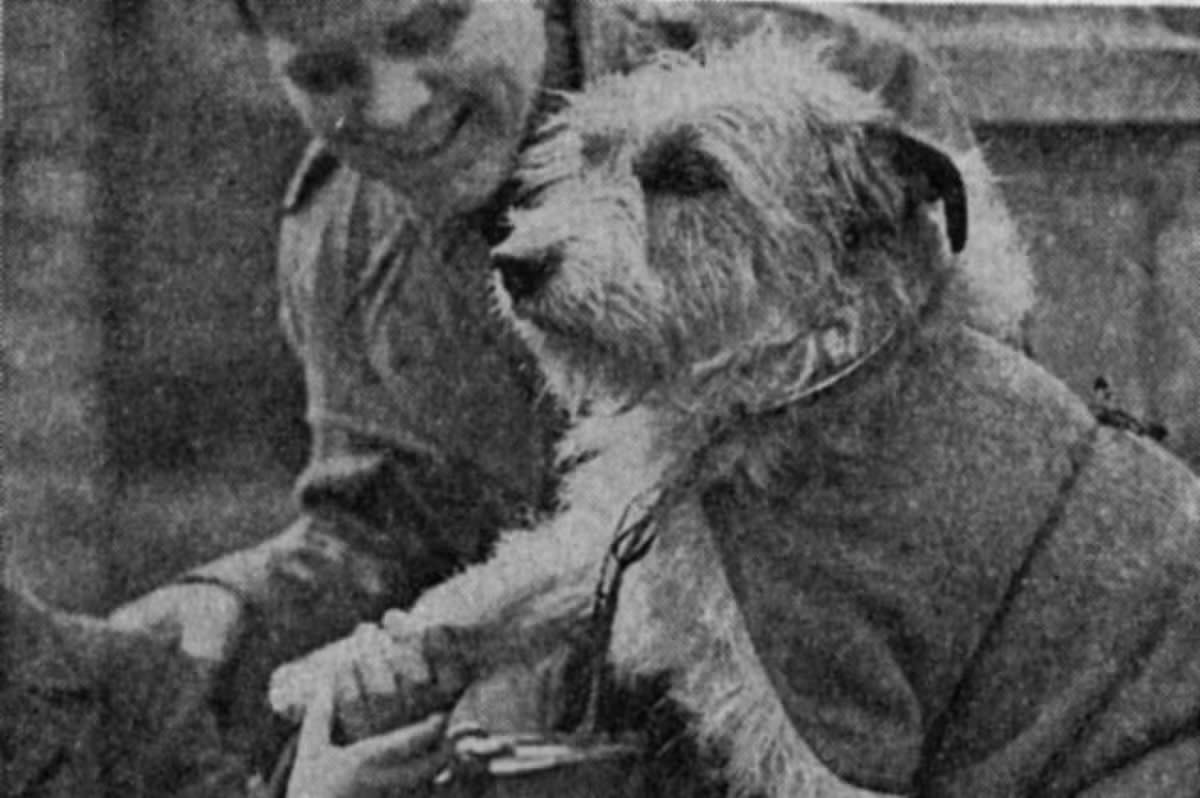
Snips: The Dog Who Fundraised His Way into Folklore
It was the 1950s when nobody would buy this Sealyham Terrier pup, so, if Snips couldn’t be sold, enterprising market trader, Henry Tyler, brought him to work instead.
It was at the Central Market – now Cornhill Market – that Snips became a firm favourite with passers-by.
So, Tyler, with the entrepreneurial mindset, had a simple idea: charge a penny to stroke him.
It sounds daft, but it worked because it was a fun cause in an era where people actually carried a pocket full of pennies.
From this, Snips wasn't just Henry Tyler's companion - he was Lincoln's own canine celebrity – and who doesn’t love local waggy tailed celebrity?
So, day after day, week after week, those pennies added up.
Over the period of the 1950s it came to over £35,000 - a huge amount for the time - which Tyler donated to local charities, including; flood relief after the devastating 1953 East Coast floods hit Lincolnshire hard.
That's also why people love the story, there's no grand plan - just a generous bloke, his dog, and a lot of very happy strangers.
The Strugglers Dog: Lincoln's Ghostly Hound
Now in this tale, the proximity to the castle is seriously significant – so, first some context, then we’ll conspire…
Until the early 20th century, Lincoln Castle housed the county prison, where convicted criminals were imprisoned and executed.
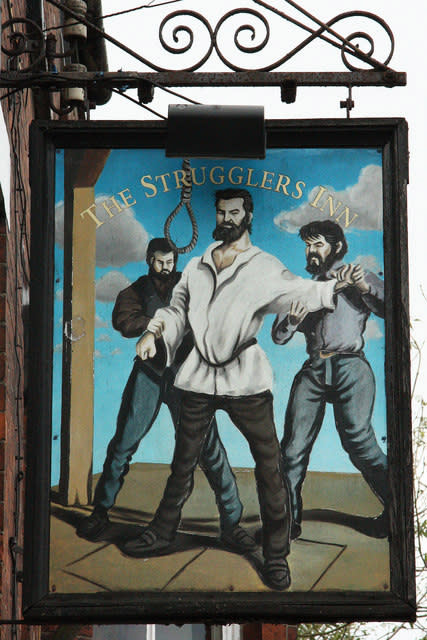
A short walk from Lincoln Castle sits The Strugglers Inn – one of Lincoln's oldest and most characterful pubs tucked away on Westgate.
Dating back to 1841, the historic inn is known not only for its award-winning ales, but also for one of the city's darkest legends.
The story centres on pub regular William Clarke - a 19th-century poacher executed at Lincoln Castle in 1877 for the murder of gamekeeper Henry Walker.
Clarke’s his dog, a whippet, whined and scratched at the door of the inn every day, clearly pining for his dead master. The kindly landlord of the time, Bob Roberts, would let the dog in to be fed and watered each day, and to sit by the fire, but the dog died a short time after supposedly from a broken heart. Bob had the whippet stuffed and placed in a case out of respect, and it remained in pride of place behind the bar until as late as the 1980s, when it was presented to the Friends of Lincoln Castle. It’s still in the castle, athough there have been attempts to repatriate the dog to the pub.
Apparently, the whippet’s presence can still be felt as visitors since have long reported hearing phantom footsteps, scratching claws and even glimpsing the ghostly dog resting by the fire before disappearing without a trace.
Whether it depicts history or folklore, the tale has become one of Lincoln's most enduring ghost stories - rooted in real history, darkened by execution, yet kept alive by the kind of damp, atmospheric streets that have been built for ghost walks and haunted tales.
Oh, and whether you believe it or not is beside the point - the Strugglers Dog endures because it blurs the line between history and folklore, and between memory and imagination - and about the particular sadness of an animal that outlives the person it belonged to.
The RAF Scampton Dog:
This one is more complicated - and more Lincolnshire than Lincoln city itself, but impossible to leave out.
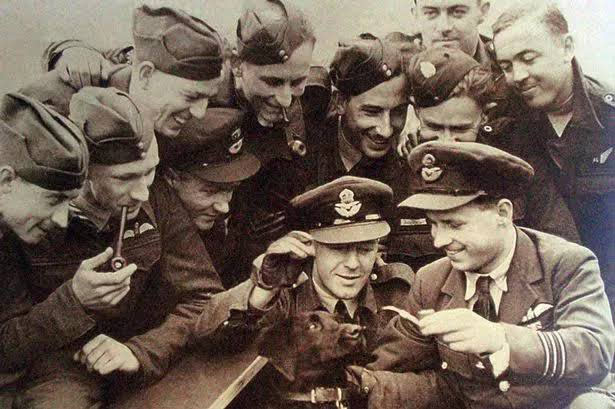
Wing Commander Guy Gibson, only 24 years old, arrived at RAF Scampton with his dog - a black Labrador Retriever who became the mascot of 617 Squadron - accompanying Gibson on training flights and was a regular visitor to the Officers’ Mess.
Sadly, Gibsons dog died on 16 May 1943 - the day of the famous Dambusters raid - when he was hit by a motorist and was later buried at midnight as Gibson was leading the raid.
Following the death, apparently the dog's name was used as the codeword Gibson transmitted in Morse code to confirm the breach of the Möhne Dam.
The dog's original name was a racial slur that was commonly used as a name for black dogs in Britain during the 1940s.
In July 2020, the headstone at the dog's grave at RAF Scampton was replaced, with his name removed - to quote the RAF - "it did not want to give prominence to an offensive term that went against its ethos."
Visitors can still see the grave at RAF Scampton today – although, the dog's original name no longer appears on the headstone, the site has become a focal point for wider conversations about remembrance.
Hairy Jack: Lincolnshire's Phantom Hound
The Black Dog, known in Lincolnshire as Hairy Jack, is a mythical phantom hound said to haunt the county's countryside, lanes and riverbanks.
Tales of the enormous black dog have been told for hundreds of years, with sightings recorded as early as the 12th century.
Unlike similar legends elsewhere in England, where black dogs are often considered omens of death, Lincolnshire's Black Dog is frequently described as a friendly and even a fairly protective presence, one that accompanies lone travellers at night, then disappearing without a trace.
The legend became widely known thanks to Lincolnshire folklorists such as Ethel H. Rudkin, who collected dozens of eyewitness accounts in her influential 1938 paper The Black Dog.
Although there is no evidence the creature exists, it remains one of Lincolnshire's best-known pieces of folklore, and continues to inspire books, ghost stories and Lincoln’s local history today.
Why Does Any of This Matter?
Each of these dogs’ map onto a different part of Lincoln and Lincolnshire's identity.
Snips belongs to the working life of the market square – cheerful and community-minded.
The Strugglers Dog belongs to the castle’s darker history - shaped by execution, loss, and the folklore that grows in its aftermath.
The Scampton dog belongs to one of Britain's most celebrated wartime moments, and to an unresolved argument about memory and language.
And Hairy Jack belongs to the deep countryside, the long flat lanes and winter evenings that shaped Lincolnshire long before any of the rest.
In a city used to selling itself on cathedrals and Roman history (all fair game), its dogs tell a different kind of story.
A story about ordinary life, grief, community, and the persistence of local memory.
Together, they reflect the loyalty and kindness often associated with Lincoln’s dogs - qualities that we hope say something about the city itself.
Do you know a Lincoln dog with a story worth telling?
We'd love to hear it - get in touch and help us celebrate the dogs that make our city such a welcoming place for people and their best friends. Send your stories to newsdesk@hellolincoln.co.uk.