



July 14, 2026 marked the 90th anniversary of RAF Bomber Command.
Second World War Second World War veterans and senior RAF commanders were among the guests commemorating the anniversary and the sixth International Bomber Command Day.
The venue was, of course, the International Bomber Command Centre on Canwick Hill, which is dedicated to the memories of the men and women whose service and sacrifice was pivotal to the war effort.
Amelia Cosgrove paid her first visit to the centre shortly before the anniversary service.

Around 125,000 aircrew flew with Bomber Command during the Second World War, supported on the ground by more than a million men and women from 62 different nations. Of those aircrew, nearly three in four would end the war dead, seriously wounded, or in a prisoner of war camp - and the average age at death was just 23.
Between 1939 and 1945, over 55,000 of them never made it home, lost in the skies over occupied Europe or in training accidents before they ever reached the front. Every one of those lives, in the air and on the ground alike, is given a name and a place at the IBCC. It's a memorial built for absolutely everyone - whatever your age, nationality, or how much you think you already know about Bomber Command – it’s a space for recognition, remembrance, and reconciliation.
Standing tall on Canwick Hill, staring straight back at Lincoln Cathedral, the Spire of the International Bomber Command Centre doesn't do subtle. It's 102 feet of weathering steel - the exact wingspans of an Avro Lancaster and a Spitfire.
The Grounds: Lincoln’s Most Moving Viewpoint
Free to wander, start with a stroll through the grounds in contemplative solitude.
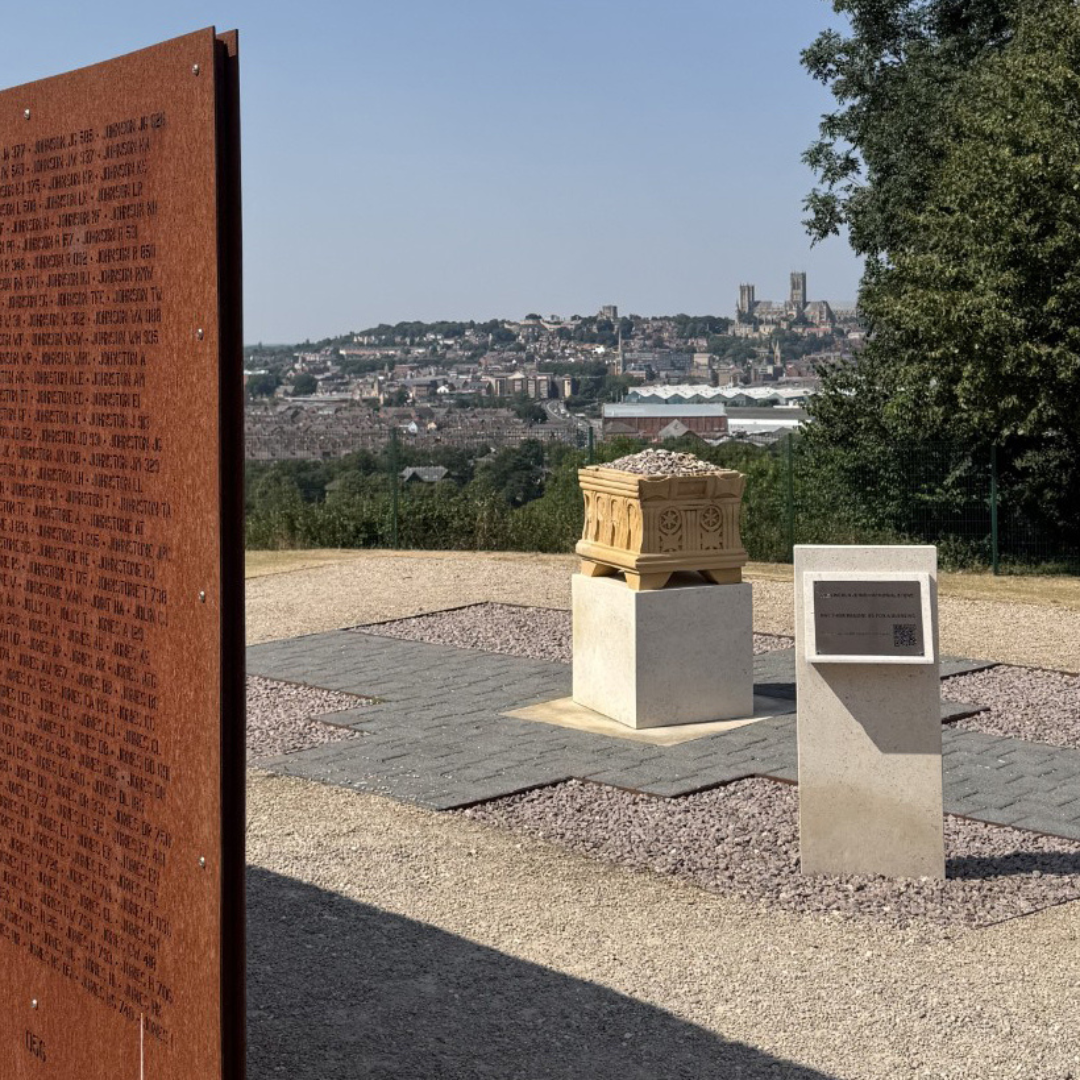
Personally, I was taken back by the view from the Spire which is spectacular. The whole of Lincoln is revealed to you, with the Cathedral standing proudly on the opposite hill - and that's no accident. The two "wing fragments" of the Spire are angled so that walking through them lines you up perfectly with the Cathedral, because for generations of aircrew flying out of Lincolnshire, that skyline was the last landmark they saw before heading east, and sometimes the last one they ever saw at all.
Surrounding the Spire which grasps onto poppies, are curved steel walls carrying the names of nearly 58,000 people who died serving with Bomber Command.
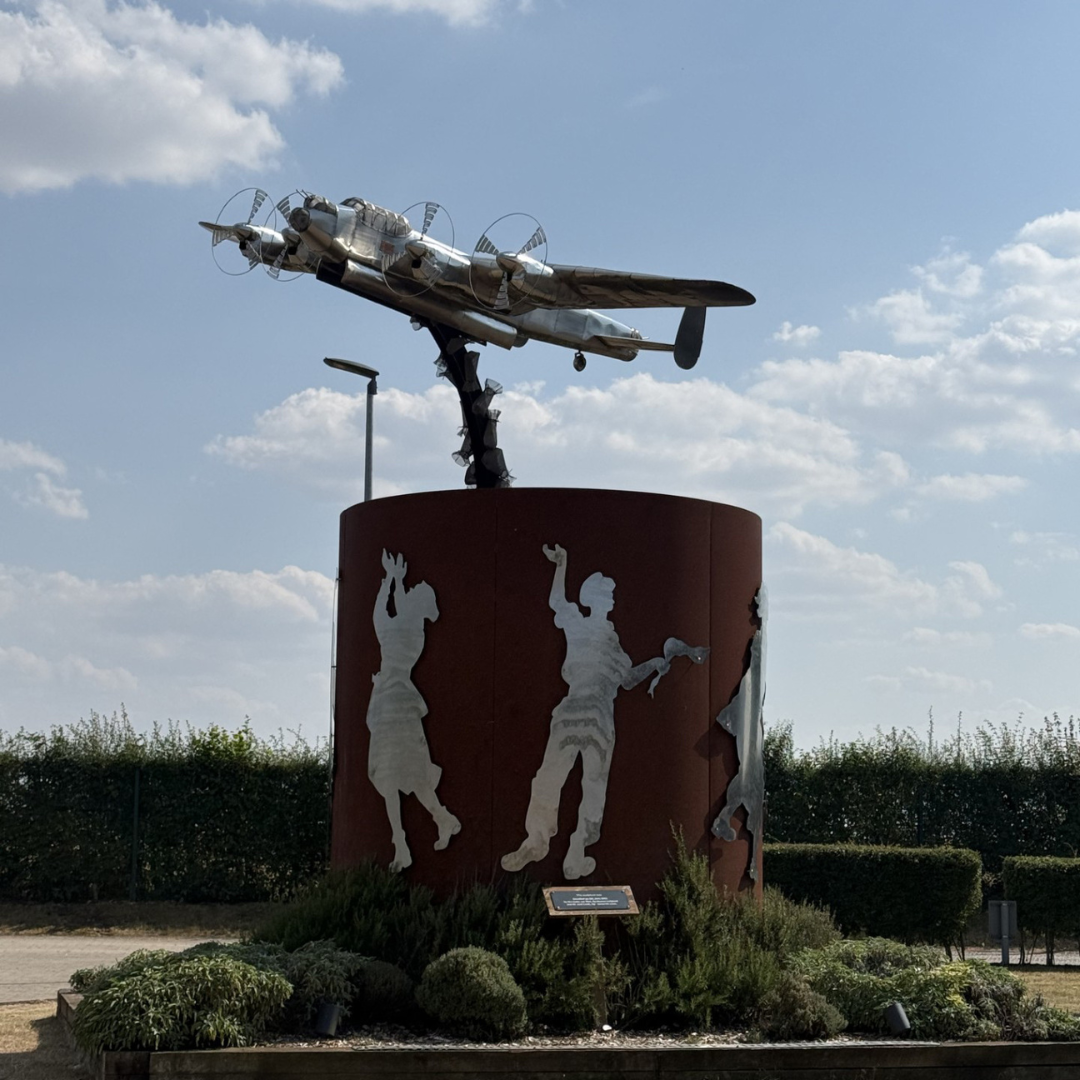
One detail I loved: scattered among the grounds are steel silhouettes of women, each representing a different trailblazer from the war - the codebreakers, the mechanics, the pilots ferrying aircraft, the ones history books can have a habit of leaving out.
The Exhibition
For just £12, this is an exhibition that delivers both emotional depth and historical substance.
Behind the dotted glass cases, you’ll find people’s treasures: the small objects that offered comfort, distraction and a sense of normality during extraordinary times. There are Italian board games from 1935 - although not your typical family pastime, this variation of the Game of Goose was designed to teach children air raid precautions - alongside packs of cards, saxophones and other everyday belongings that reveal the human side of wartime life.
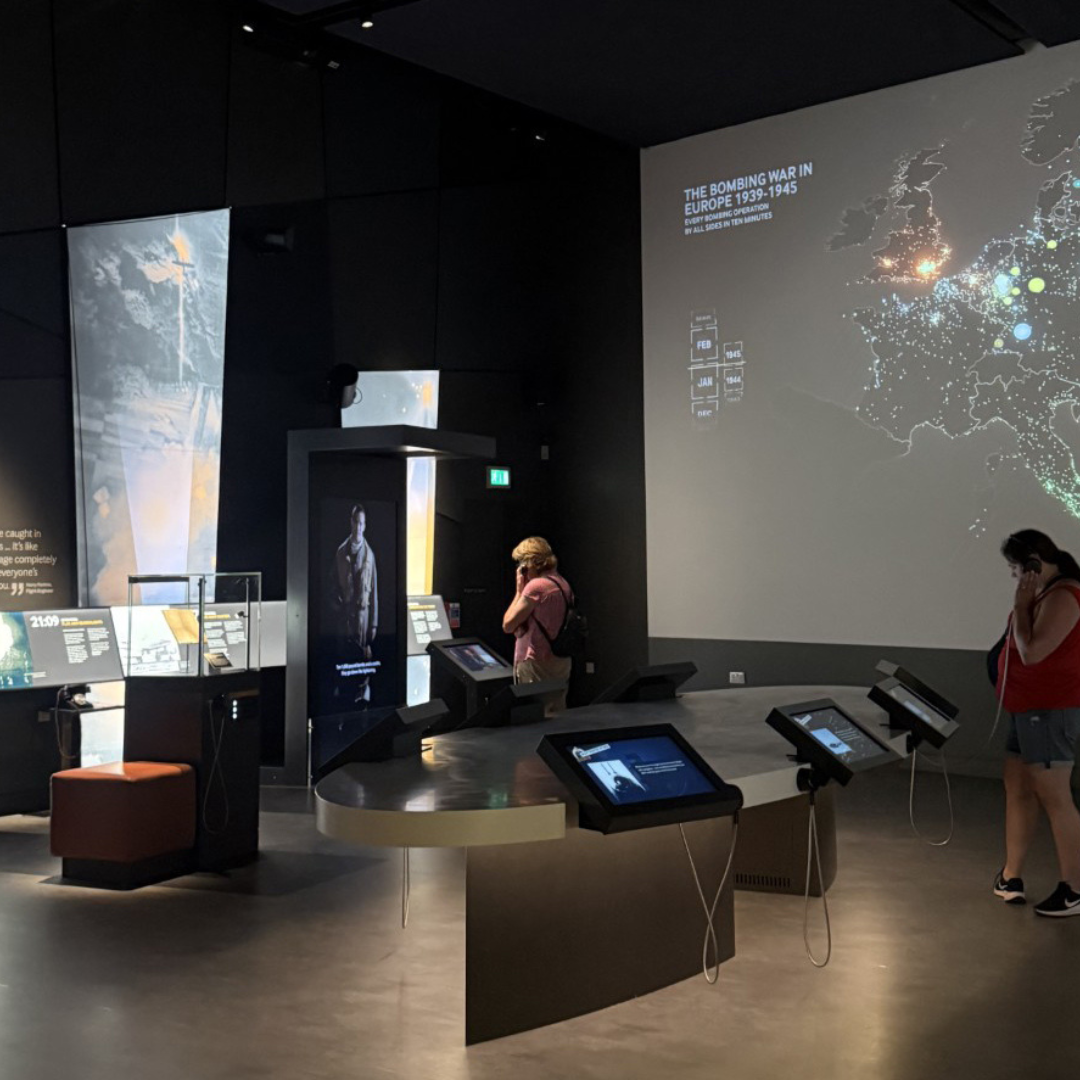
There's a clever bit of theatre in there too - interpretive black and white short films and digital displays bring the stories behind the objects to life, while shadow silhouettes of bombers fly across the ceiling and walls above you, as if the planes themselves are passing over.
My favourite touch; scattered through the exhibition are old-fashioned telephone handsets - pick one up, dial the number beside it, and you're connected to a stranger's story - there's something almost mischievous yet melancholy about it - like eavesdropping on history.
To its credit, the exhibition doesn't try to tidy the story into something comfortable.
It's honest about the scale of loss on both sides, and about the decades Bomber Command's veterans spent without official recognition.
But it never tips into misery-tourism either, it's portrayed considerately - that’s why it’s so moving.
The Cafe: Tea, Wad, and a Side of History
Even the cafe gets in on the storytelling.
The menus you’ll find on each table converses into wartime slang, with "tea and wad" (that's tea and cake, for the uninitiated), a full "Bomber Breakfast," and soup served under the old RAF call of "Soup's Up" - and each one comes with a little note explaining where the name and the story behind it came from.
It's a little thing, but it means you're still learning right up until the moment you sit down with a cuppa.
Their gift shop is a delight to browse, too. With a dress-up corner where little ones can become part of a squadron, alongside vintage magazines and books to leaf through, it's an attraction in its own right.
The Verdict
Between the view, the grounds, and that wonderful analogue phone trick, the IBCC pulls off something a lot of memorials try and fail to do: it makes history feel personal rather than just monumental.
Go on a clear day if you can - the view alone is worth the trip up the hill. And don’t rush your visit - once you begin dialling those numbers, you'll find it's surprisingly difficult to tear yourself away from the stories they still have to tell.
You won’t be just listening to history; you’ll be stepping into it.